
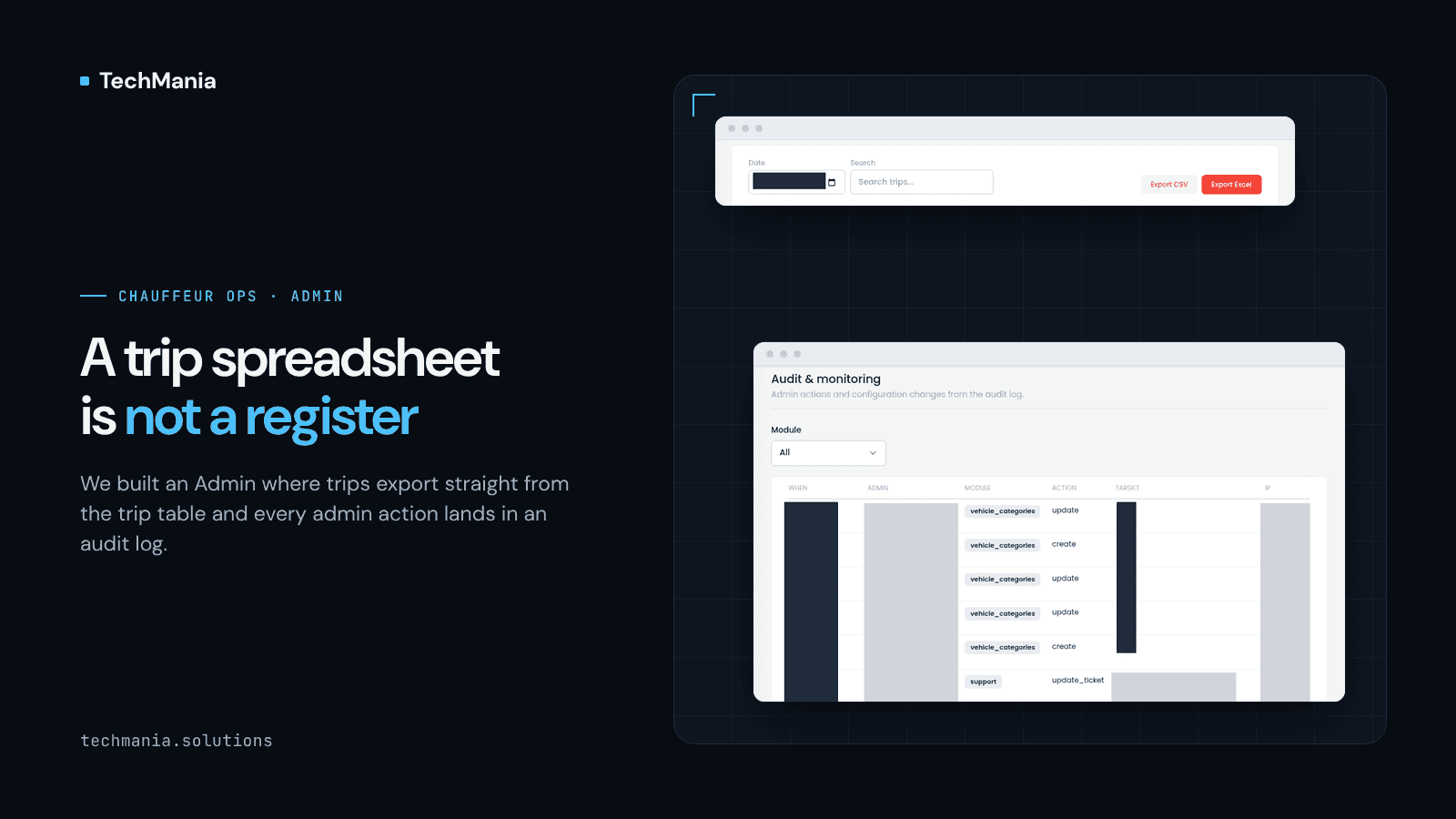
If you run a chauffeur or ride-hailing service, the consumer side of the product is usually the first thing to look finished. Riders book on a phone. Drivers go online. Trips show up on a map. Then a regulator, a compliance lead or a partner asks for something quieter: a durable electronic record of movements, a roster that shows who was allowed to drive, and a way to prove who changed what in the back office.
That request does not care how polished the rider app is. It cares whether ops can export trips, whether driver eligibility sits on the same record dispatch uses, and whether there is an audit trail when something goes wrong.
Regulators are asking for records, not screenshots
Transport regulators in several markets increasingly ask ride-hailing and electronic transport operators for electronic trip records, evidence of driver eligibility and, in some cases, in-vehicle camera retention. The details differ by jurisdiction and change over time, so they belong with counsel. The operational shape underneath is much more consistent.
If a request or supervision letter ever arrives, rebuilding last month's trips in a spreadsheet is a bad way to spend the time you are given to respond. The same is true wherever an airport desk, a partner or an authority can ask for trip history, eligible drivers and a change log on short notice. A new, polished consumer app in your market raises the bar for riders; it does not remove the back-office work.
This is not legal advice, and no Admin product is a compliance certificate. Cameras, licences and register formats stay with counsel and hardware vendors. The software job is making sure the ops surfaces exist before someone needs them in a hurry.
What "register readiness" looks like in an Admin
You do not need a new platform category. You need the dispatcher, the compliance lead and whoever handles regulator requests to share one system of record. In practice that usually means:
- Trips you can export without rebuilding them. Date filters, search and CSV or Excel export on the same trip table ops already uses for status, payment and fare — not a one-off dump someone builds the night before an inspection.
- Driver eligibility on the dispatch roster. Onboarding queue, live directory and permit or eligibility fields on the same driver record assignment uses. Document packs that live only in chat apps never reach the person who approves a shift.
- Multi-company and role governance. When several operating companies or sub-admins share one platform, who can see whose trips and drivers has to be explicit.
- An audit trail. Configuration and Admin actions with time, module and action — so "who changed pricing / who approved that driver" is not a group chat argument.
- Camera retention as metadata only (if you track it). Hardware install is separate; ops sometimes only needs retention window and retrieval notes on the vehicle record. That module is extendable, not something every Admin has today.
None of these need invented fine schedules or ROI to justify. They are ordinary ops plumbing that booking apps and thin dispatch seats often skip.
What a spreadsheet loses first
When trip history, driver documents and role changes live in three different places, three failure modes show up fast:
- Export theatre. Someone filters a booking report, pastes it into Excel, renames columns and hopes the next request uses the same shape.
- Eligibility drift. A driver who was fine at signup stays on the roster after a document expires because nothing on the trip screen knows about documents.
- No record of who made the change. Surge rules, wallet adjustments or driver approvals happen in the UI, but later nobody can show who did what.
Classic private-hire SaaS exports and white-label "market-ready" packages help with booking UX. They rarely replace a dedicated Admin that already has trips export, a driver directory, roles and audit sitting beside pricing and wallets.
What we've built that applies
We built a chauffeur and ride-hailing operations Admin, together with its driver and customer apps. On the Admin side, the surfaces that matter for this problem are already in place: Manage Trips with date and search filters plus CSV and Excel export; a New Drivers onboarding queue and a live Drivers directory; multi-company support; role management; and an audit log of Admin actions.

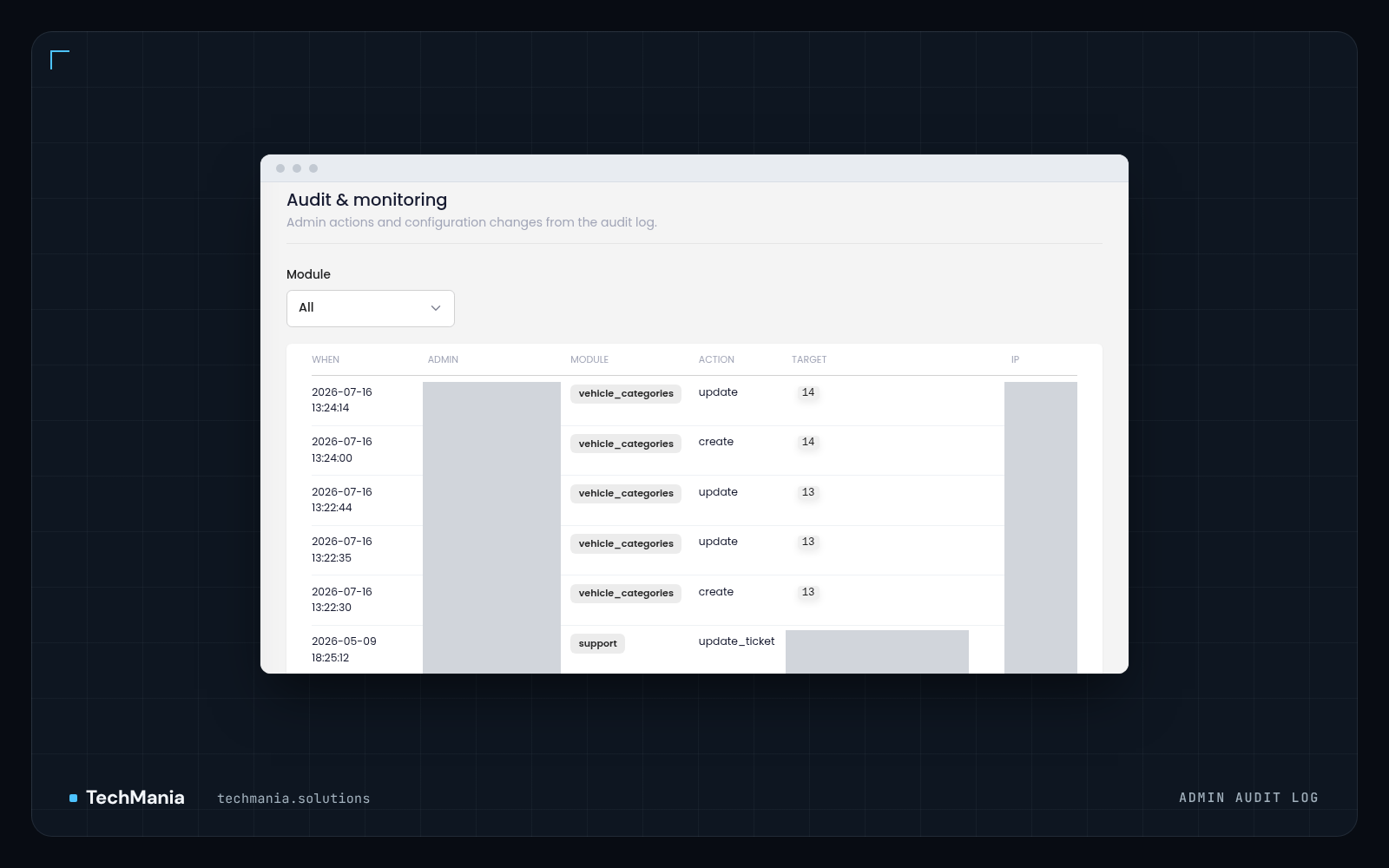
Those are building blocks for register and eligibility ops readiness. They are not a claim that this Admin ships a regulator-certified trip register, automatic eligibility expiry alerts or a camera-retention product. Exact regulator field sets and camera metadata stay extendable and should be designed with counsel. We do not install cameras or issue licences.
Pricing hubs, surge simulation and wallets — covered in our earlier blog on why a live rider app is not a pricing hub — sit beside this work. Today the point is narrower: when supervision gets serious, trip export, roster fields and audit are the first things someone will ask for.
Where to start this week
- Export last week's trips from the system you actually run. If the path is "ask engineering for a one-off CSV", you do not have an ops export yet.
- Put eligibility or permit status on the same driver record dispatch assigns from, even if the first version is a manual field.
- Decide who outside your company may see which records, and stop sharing a full Admin password for that.
- Turn on or review the Admin audit log for driver approvals and pricing changes.
- Keep camera installs and legal interpretation with the right vendors and counsel; use software only for the records ops can keep.
A finished rider app is necessary. It is not a trip register, an eligibility roster or an audit trail. If you want those sitting beside dispatch in one Admin, talk to us at https://techmania.solutions.
General market context only — not legal advice. Requirements vary by jurisdiction; confirm yours with counsel.